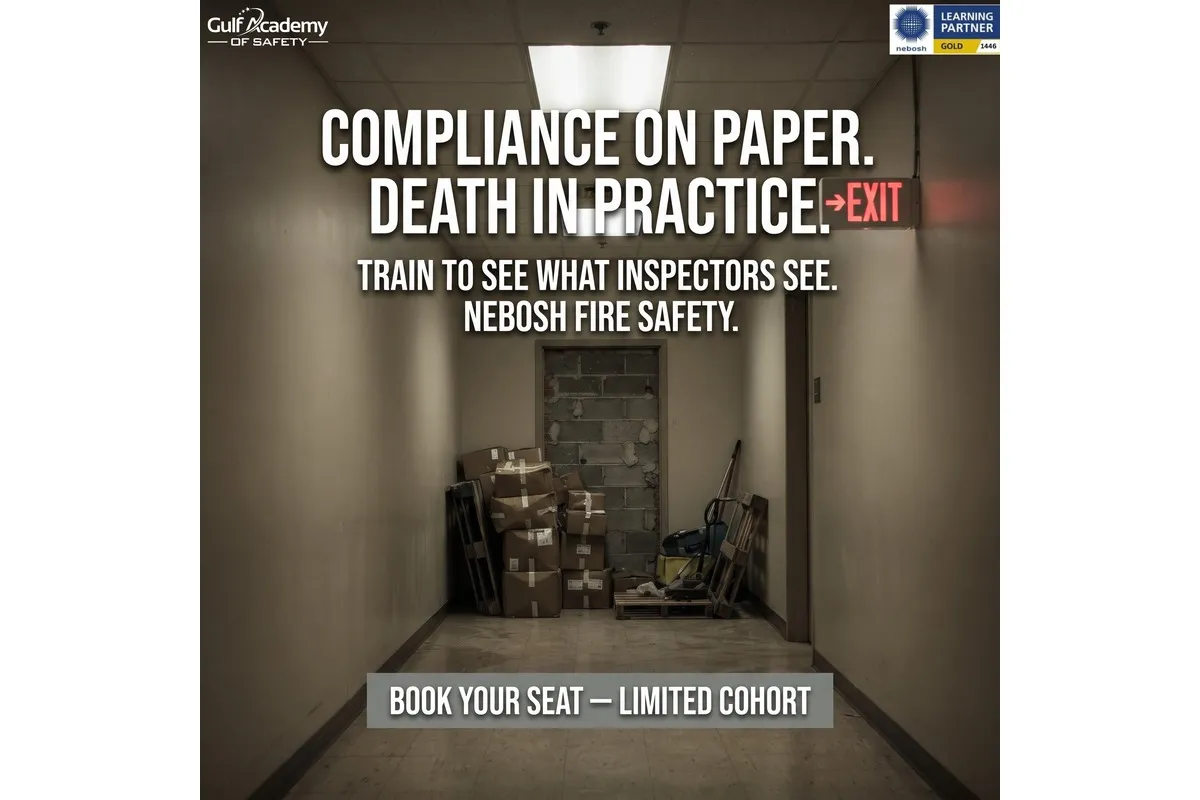
Fire and Safety NEBOSH Gulf Academy Safety: Complete Guide
Workplaces never stand still. New equipment arrives, processes change, and buildings grow taller and more complex. Yet one thing stays constant: fire remains a threat that demands respect. The organisations that stay safest are those with people who know how to recognise danger and act on it.
Choosing the right Fire and Safety NEBOSH programme is one of the smartest ways to become that person. This guide explains what the training involves, who benefits, and how it can shape your career.
What Does NEBOSH Stand For?
NEBOSH is the National Examination Board in Occupational Safety and Health. It is an awarding body known worldwide for its health and safety qualifications. Employers in many regions treat a NEBOSH credential as a dependable sign of competence, because it is earned through structured study and formal assessment rather than informal experience alone.
Not Just for Safety Professionals
Fire and safety training is valuable far beyond the safety department. Managers, supervisors, engineers, security staff, hotel teams, site coordinators, and business owners all make decisions that affect fire risk. Training gives them a shared language and a systematic method for managing it.
When everyone speaks the same safety language, communication improves, mistakes shrink, and response times get faster.
Starting With the Fundamentals
The programme begins by explaining why fires start, how they grow,w and what makes some materials and processes more dangerous than others. You study how smoke, heat and toxic gases affect people, which explains why early detection and quick evacuation are so vital.
This understanding turns abstract rules into practical reasoning. You stop following instructions blindly and start understanding the purpose behind them.
Risk Assessment: The Backbone of Safety
Imagine walking through a workplace with fresh eyes. You look for ignition sources, fuel, blocked routes, es and weak controls. You ask who might be harmed and whether current precautions are enough.
This is the heart of fire risk assessment. You learn to record findings clearly and plan improvements in a sensible order. A well-documented assessment helps organisations prioritise spending and demonstrate that they take safety seriously.
Protection and Prevention in Practice
The course covers technical systems such as alarms, detectors, extinguishers, sprinklers, emergency lighting, signage and fire-resisting construction. Equally important are everyday controls like good housekeeping, safe storage, permit-to-work systems,s and regular inspection.
The key lesson is that technology and habits must work together. The best alarm in the world cannot help if exits are blocked or staff do not respond.
Planning for Emergencies
Emergency planning completes the picture. You examine evacuation routes, assembly points, warden roles, and the importance of training and drills. You also learn how to adapt plans for contractors, visitors and people with limited mobility.
A plan that looks perfect on paper but fails in practice can be dangerous. That is why the training encourages realistic testing, honest review and continuous improvement.
Career Advantages
Roles such as fire safety officer, HSE advisor, safety supervisor and facilities coordinator often ask for recognised safety qualifications. In the Gulf region, where large infrastructure, energy, aviation and hospitality projects are common, employers value credentials with international recognition.
The qualification can also support promotion and give you greater credibility with colleagues, clients and auditors.
Choosing the Right Training Partner
The provider you choose shapes your experience as much as the qualification itself. Look for experienced tutors, practical teaching and strong exam support. Good learners deserve clear explanations, relevant examples,s and honest feedback on their progress.
A provider such as Gulf Academy Safety, which focuses on professional safety learning, can make the journey smoother and more rewarding. Ask about class formats, materials, and what help is available if you fall behind.
Learning Does Not Stop at Certification
The best safety professionals keep reviewing incidents, updating their knowledge, and sharing lessons with their teams. Treat your qualification as the beginning of a habit, not the end of a journey. Read incident reports, join safety discussions, and keep asking what could go wrong next.
Your Future Starts Here
Ready to build skills that protect lives and strengthen your career? Explore NEBOSH Gulf Academy Safety and take the first step towards a recognised fire safety qualification.


About Premium Author
This post has been authored and published by one of our premium contributors, who are experts in their fields. They bring high-quality, well-researched content that adds significant value to our platform.
.png)