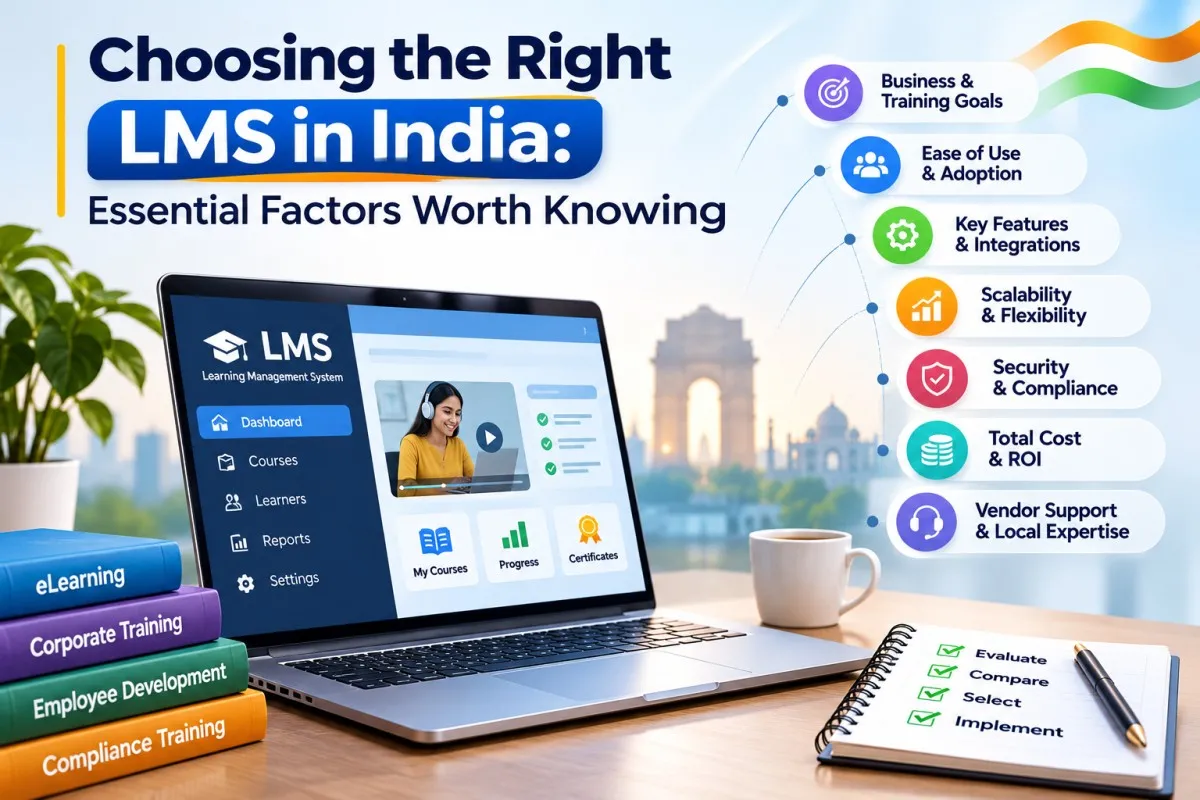
Choosing the Right LMS in India: Essential Factors Worth Knowing
E-learning is gaining popularity more than ever in India. Nowadays, digital platforms are used in urban and rural areas to teach, train and test people in schools, colleges and businesses. Building the best learning management systems India, however, isn't always easy. There are several solutions that look the same but the actual needs will differ depending on where the location is. If you make a good decision, you will be pleased with the results and save time, money and effort. This blog will discuss useful considerations that you should keep in mind before making a decision so that your choice is clear, self-assured, and appropriate for the expanding Indian educational environment.
Know Your Learning Goals First
Take the time to define your goals before picking any LMS. Some schools will require exam preparation while others will require skills certification or training for staff. For one reason or another, there is no single system that is universally applicable to everyone in India, as there's a huge diversity of schools, institutions, start-ups and large businesses. State the outcomes, learners groups, course types in a clear, straightforward way. This is the phase that helps to keep your team involved and avoid confusion later on. This really helps when you can see through your objectives, and you have the ability to compare options and this helps you to improve your confidence when making a choice. A system that is functioning towards your needs will yield better results than one that is chosen simply because it is pretty.
Language and Local Relevance
The population of India is multilingual and learning is facilitated when the material is understood. A good system should cater for easy reading alternatives, regional languages and simple subtitles. It would also be preferable to have lessons, case studies, examples which would be representative of Indian classrooms and workplaces. Realistic stories can also act as motivators and gain acceptance, so cultural sensitivity also matters. Check to see if the platform allows for easy translation or editing of content.
Internet and Device Reality
The level of connectivity is quite different between villages, small towns and metropolises of India. Any learning system that is useful has to be usable on low-cost cellphones and slow connections. Seek out alternatives to the online experience including downloadable courses, lite sites for people who do not have access to the internet regularly. It needs to look simple on small screens as many students may prefer to access it on a mobile screen rather than a computer. Before deciding, test the system on various devices. Every learner has an equal opportunity to advance at a comfortable and steady pace thanks to reliable access, which guaranties that learning does not cease due to weak signals.
Budget and Long-Term Value
While cost is a factor to consider, the wherewithal isn't the most economical. Ask for setup, training, upgrade, and maintenance costs as well as the initial cost. Costs may change rapidly with growth; consider the number of students that you expect to have in the present and future. With a flexible plan, institutions and businesses can only pay what they need. Evaluate the value as opposed to the numbers that the system can save your team in terms of time and effort. When you are budgeting honestly and realistically you won't be surprised with the downside and will enjoy consistent benefits from your learning investment for many years to come.
Conclusion
Choosing a learning management system for employees in India can have lasting effects on the learning journey of individuals. But you can avoid mistakes by focusing on specific goals, local language needs, device realities, equal budgets along with data security. Think about what you will do, what you can do, and what your students will do. A good system helps to build development through accessibility, reliability and satisfaction of training and education.


About Premium Author
This post has been authored and published by one of our premium contributors, who are experts in their fields. They bring high-quality, well-researched content that adds significant value to our platform.
.png)